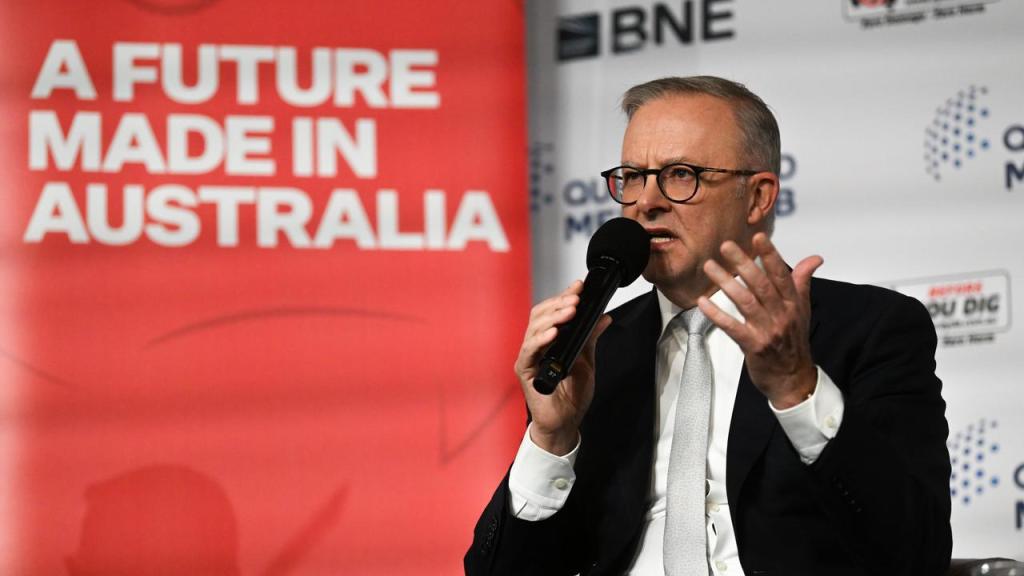
A Future Made in Australia | How will Mining and Energy shape the future | Opportunities for skilled workers
A Future Made in Australia
The Federal Government has outlined the next steps in its mission to create jobs and opportunities in Australia by reshaping the Mining and Energy sectors. Outlined by ‘The Future Made in Australia’ plan, a change in tactic from the last mining boom and points towards economic growth and new opportunities for skilled workers.
Prime Minister Anthony Albanese has signalled that enabling investment, value-adding to Australia’s resources and encouraging innovation are key aspects of the plan to establish Australia as a renewable energy superpower.
New investment in Mining and Renewable Energy
The global environment is evolving swiftly. Supply chains are facing significant strain due to growing fragmentation and heightened international competition. However, new opportunities in the clean energy sector are emerging, poised to influence the global economy’s trajectory for the next decade and beyond. Australia can establish a lasting comparative advantage in green metals by leveraging its plentiful metal and renewable energy resources.
The Budget has allocated significant resources to the Future Made in Australia plan, including $3.2 billion to the project over 10 years to encourage investment in fields that aligned with the National Interest Framework:
- Renewable Hydrogen
- Critical Minerals Processing
- ‘Green Metals’ – utilised in clean energy applications and can help achieve net zero emissions targets.
- Low Carbon liquid fuels
- Clean energy manufacturing – battery, solar panels, storage etc.
Energy Industry Jobs Plan – $44.4 million & Regional Skills and Employment – $134.2 million
Furthermore, the budget also delivers the $44.4 million Energy Industry Jobs Plan and $134.2 million for skills and employment support in key regions. The Government is also working closely with trading partners to identify opportunities to drive greater supply chain transparency and better market recognition of high environmental, social and governance standards in the critical minerals sector.
Australia’s Critical Minerals Opportunity
The plan brings together post-COVID concerns about the need to protect national economic sovereignty, promises a brighter economic future and manufacturing jobs once the resources boom fades. The Prime Minister is of the view that Australia can compete with other countries, such as China, on making batteries, solar panels, and other green technology. Australia’s unique combination of rich natural resources, advanced technological capabilities, and commitment to renewable energy positions the country to become a leading player in the global green tech industry. By capitalising on these strengths, Australia can not only match but potentially surpass the manufacturing capabilities of its international counterparts in this rapidly growing sector.
Like the previous mining boom, there is a big opportunity for Australia to take advantage of valuable trading partners to process its green resources. But unlike the previous mining boom – this time around – the Government wants to ensure that downstream processing into batteries and other components stays on-shore. The largest refineries in the world will be presented with investment opportunities to source and process metals that go into making batteries, including Zinc, Copper, and Lead in Australia, providing jobs and opportunities that did not exist in the last boom.
Incentives and Value-adding
Critical Minerals Production Tax Incentive – $7 billion between 2027-28 to 2039-40
The Government has purposefully made arrangements in the Budget to ensure the value-adding to Australia’s resources and strengthening economic security. This will be done by many controls and policies, most significantly the ‘Critical Minerals Production Tax Incentive’. This will provide a production incentive valued at ten per cent of relevant processing and refining costs for Australia’s 31 critical minerals, for critical minerals processed and refined between 2027-28 to 2039-40, for up to ten years per project, at an estimated cost to the Budget of $7 billion over the medium term.
Solar and Battery Supply Chain Projects
In addition to this, there will be $1.5 billion to strengthen battery and solar panel supply chains towards projects such as the Solar Sunshot Program and Battery Breakthrough Initiative.
Trade Partnership – $14.3 million
There is also a $14.3 million commitment to work with trade partners to strengthen Australia’s global competitiveness and support benchmarks for trade in high-quality critical minerals. These initiatives are designed to support Australian businesses in transitioning to a new market and explore potentially lucrative opportunities.
Australian ideas and skills
The Future Made in Australia plan prioritises domestic ideas, training, and infrastructure. Through these combined efforts, the Future Made in Australia plan aims to position Australian companies at the forefront of technological advancements and sustainable practices, playing a crucial role in the country’s economic growth and global competitiveness in mining and manufacturing.
Map Australia’s Endowments of Critical Minerals and National Groundwater Systems – $566.1 million
$566.1 million has been committed by the Government to map Australia’s endowments of critical minerals and national groundwater systems. A strategic examination of Australia’s research and development system to grow research and development and build a more resilient and dynamic economy will also provide opportunities for Australian companies to have an important role in shaping the future of mining and manufacturing in the country.
Regional Workforce Transition Plans – $178.6 million
Transitioning the country to a clean energy superpower requires significant training and up-skilling of its current and future workforce. $178.6 million in additional employment and skills supports for regions in transition, including the Energy Industry Jobs Plan and place-based Regional Workforce Transition Plans has been committed to ensure this transition.
New Energy Apprenticeship Program – $91 million
$91 million has been committed to accelerate the development of the clean energy workforce by upgrading training facilities, supporting teachers and trainers, and expanding access to the New Energy Apprenticeship Program. These investments in workforce development and regional support are key components of the broader strategy to transition Australia to a clean energy superpower. They highlight the Government’s commitment to creating sustainable job opportunities, fostering economic resilience, and ensuring that the workforce is equipped to meet the demands of the reshaped energy sector.
Key Takeaways to Move Forward
- Renewable Energy Investment: The Australian Government’s Future Made in Australia plan prioritises renewable energy infrastructure. Skilled migrants are invited to contribute to establishing Australia as a renewable energy superpower.
- Strategic Resource Allocation: The Budget allocates $3.2 billion over 10 years to key sectors such as Renewable Hydrogen and Clean energy manufacturing. Skilled migrants can play a role in shaping Australia’s future energy landscape.
- Job Creation and Skills Development: Initiatives like the $44.4 million Energy Industry Jobs Plan aim to create jobs and support skills development in the energy sector, providing opportunities for skilled migrants.
- Value-Adding Incentives: Policies like the Critical Minerals Production Tax Incentive encourage value-adding to Australia’s resources, offering skilled migrants’ opportunities to contribute to cutting-edge projects.
- Mapping Australia’s Critical Minerals: With $566.1 million committed to mapping critical resources and promoting domestic innovation, skilled migrants can help lead technological advancements in mining and manufacturing.
- Transition to Clean Energy: $178.6 million is allocated for workforce training and up-skilling in the clean energy sector, providing opportunities for skilled migrants to contribute to Australia’s transition to a clean energy superpower.
Australia invites skilled workers to join its transformative journey towards a sustainable future. With significant investments in renewable energy infrastructure, job creation, and skills development, there has never been a better time to contribute your expertise. Seize the opportunity to shape Australia’s energy landscape, drive innovation, and lead the way in clean energy technology.