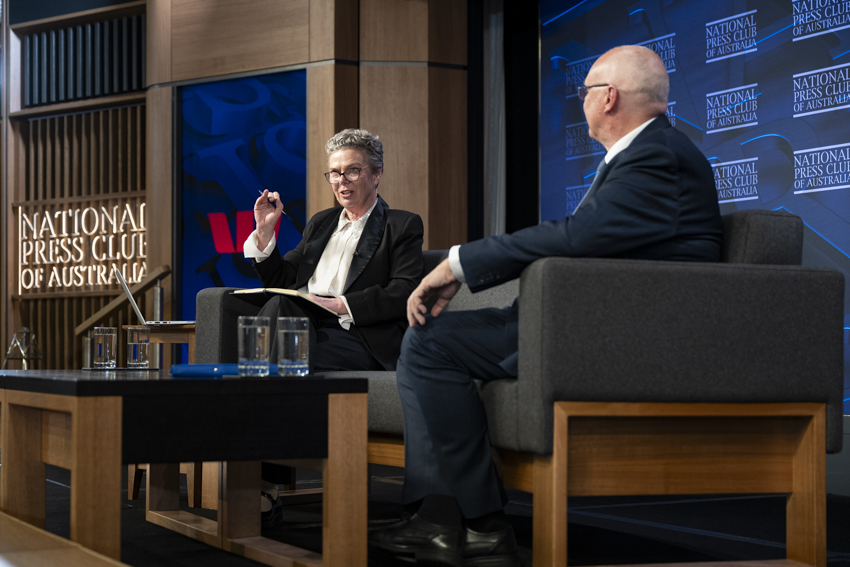
Jobs and Skills Australia (JSA) is a government agency that provides data, analysis, and insights into Australia’s labour market to the Australian Government and other stakeholders in the Australian economy. On 14 August 2024, the commissioner of JSA, Professor Barney Glover, addressed the National Press Club on the topic of ‘Skills Success in Australia: Aligning need with know-how.’ This article will summarise key takeaways from Professor Glover’s address on the topics of Australia’s Skill Shortage, the challenges to ‘Building the Future,’ the need to rebalance higher education and the distinct connection between education and skills.
Skills Shortage
Professor Glover made clear that Skills Shortages in Australia are persistent. 35-36% of occupations in Australia are in a shortage of qualified workers. JSA’s research indicates that many occupations in shortage are the skills that will be in critical demand in the future. JSA argues that lasting and effective change will not be possible without improved VET in school programs and the associated infrastructure. Young people willing to upskill themselves are likelier to have better outcomes and be more employable.
JSA’s stated priorities are to improve pastoral industry support, quality career advice and foster greater awareness of the careers available now and in the future. Some industry leaders are proactive in this area by taking ownership of addressing skill shortages, such as BHP FutureFit Academy. The Academy has partnered with higher education facilitators to deliver qualifications and hands-on experience, which suggests that some industry leaders are aware of their role in addressing skills shortages. Initiatives of a similar nature are expected to help bridge the gap in skilled occupations.
Challenges to ‘Building the Future’ with Skilled Workers
‘Building the Future’, a nation-building term coined by the Commissioner, will require contemporary skills to deliver the future needs of a 21st-century economy. The government has set a target of 80% of the working-age population having tertiary-level skills by 2050, with further consideration to the rebalance of skills and qualifications across the VET and higher education spectrum needed to best suit the needs of future initiatives.
Policies that the Commissioner highlights that will suffer from gaps in the labour market include the Future Made in Australia plan, becoming a clean energy superpower, leveraging opportunities from AUKUS pillar 2, improving defence capabilities and decarbonising the economy. The National Skills Agreement between the Commonwealth, States and Territories to strengthen vocational education and training nationwide is a significant initiative to fill these gaps. Studies identifying the gaps in the labour market also target how to incorporate First Nations Australians, women, and people from regional Australia as part of the solution.
The Clean Energy Capacity study identified 38 occupations in which the current workforce is in shortage. Similar studies have identified the need for education and training to be complemented by migration pathways to effectively support the Government’s policies where addressing skilled labour gaps is a major barrier.
Rebalance of Higher Education in Australia
Education was a major theme of Professor Glover’s address, noting that disparities in higher education correlate strongly with gaps in the labour market. JSA indicates that 5.5 million Australians have a bachelor’s degree or higher, a 31% increase since 2016. In contrast, 4 million people reported having a Certificate I to IV, only an increase of 11%. Projections show that 90% of jobs in the next ten years will require post-secondary education, 44% of which require a VET qualification or a combination of VET and higher education.
The Government is considering steps to manage the domestic and international student load more effectively. The Commissioner acknowledged that public universities in Australia are funded to support domestic students. The Commissioner also acknowledged that international students taking up residency in Australia will be vital to fill skills shortages.
Regarding domestic students, the Commissioner sought to make a point: “I’ll be blunt we need to raise enthusiasm – in numbers too big to ignore – for vocational education and training from deep within our school system.”
Connection Between Primary and Secondary Education and Skilled Workers
The Commissioner placed a significant emphasis on the foundational benefit that quality education provides for a person. NAPLAN results suggest that one in three students cannot meet basic literacy standards. JSA found the need for a rebalance at all levels of education increasingly necessary, especially for people from low socio-economic backgrounds, with disabilities or from regional and remote communities.
Parents, teachers, career advisors, and mentors were called upon to impart the transformative power of post-secondary education. JSA’s analysis indicates that the unemployment rate for 25-34-year-olds with higher education qualifications is 3.5%, whereas the unemployment rate for the same demographic without Year 12 or any tertiary qualification is above 10%.
Expanding the quantity of post-tertiary qualifications for First Nations people is also a priority for JSA, which has set a target of 70% of 25–34-year-old First Nations people having a tertiary qualification by 2030.
Conclusion
In conclusion, Professor Barney Glover strongly argues that tertiary education is fundamental to providing better outcomes for the individual and the economy, arguing that the connection between the two is essential for Australia’s prosperity. This positive outlook of the future acknowledges the challenges that lay ahead before these goals are achieved.